

Food & Beverage
Food and Beverage Industry
The food and beverage industry includes food processing, beverage production, and related products
F&B INDONESIA: SOUTHEAST ASIA'S GIANT MARKET
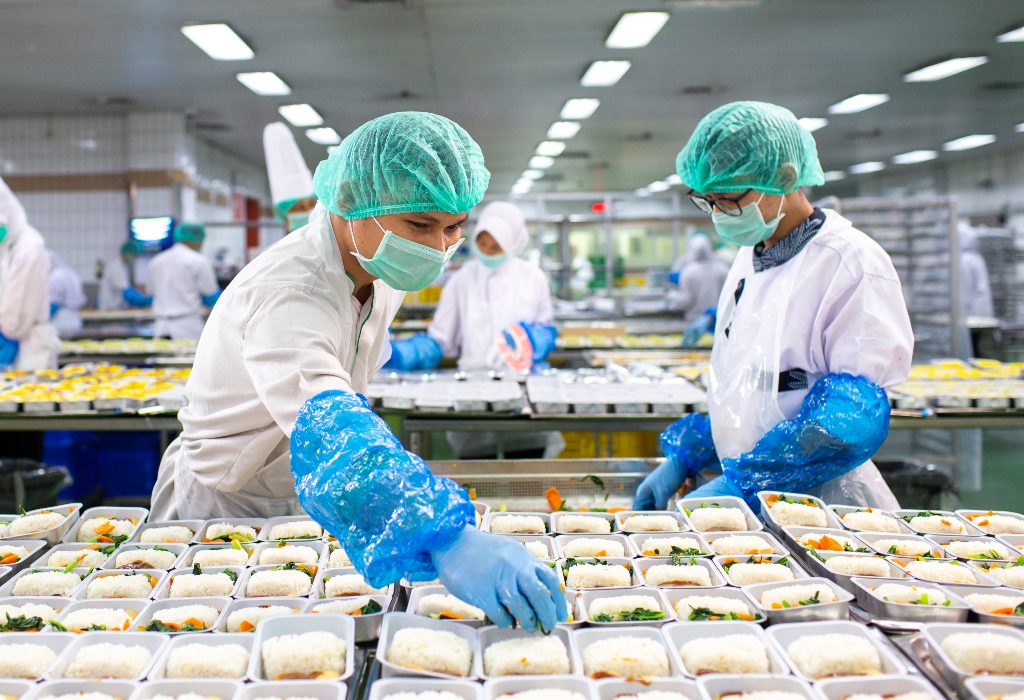
Serving 278 million palates, captivating the global market.
Indonesia is not merely a consumer market; it is a growth engine for the food and beverage (F&B) industry in Asia Pacific. Driven by a rapidly expanding middle class, urbanization, and increasingly modern tastes, the F&B sector is the largest contributor to Indonesia's non-oil and gas manufacturing GDP.
From global FMCG giants to innovative functional food startups, Indonesia offers a mature ecosystem for investors seeking to capture opportunities in the world's largest halal economy hub.
BY THE NUMBERS
- 39.1% Contribution of the F&B industry to Indonesia's non-oil and gas industrial GDP. Source: Ministry of Industry
- #1 Largest halal food consumer market in the world. Source: State of the Global Islamic Economy Report
- US$ 1.69 Billion Value of foreign direct investment (FDI) in the food sector (Jan-Sep 2023), demonstrating high global investor confidence. Source: BKPM
- 53 Million Middle-class consumers ("Aspiring Middle Class") who are the primary target for premium and packaged products. Source: World Bank
WHY INVEST IN INDONESIAN F&B?
Unparalleled Consumer Base With the world's 4th largest population, Indonesia's domestic demand is robust. Consumption trends are shifting towards instant foods, ready-to-eat products, and healthy lifestyle products, creating new profitable market niches annually.
Global Halal Industry Hub Indonesia is transforming into a Global Halal Hub. Supported by integrated halal product assurance regulations (BPJPH), manufacturing in Indonesia provides an instant "passport" to penetrate markets in OIC (Organisation of Islamic Cooperation) countries worldwide.
Abundant & Integrated Raw Materials Direct access to key raw materials such as CPO, cocoa, coffee, sugar, and seafood cuts supply chain costs. The government encourages efficient upstream-downstream integration through Special Food Industrial Estates.
Retail & Digital Revolution Massive adoption of digital technology (e-commerce, food delivery apps) has transformed the distribution landscape. New products can rapidly penetrate the national market through a mature digital ecosystem.
KEY SECTOR HIGHLIGHTS
Processed Food & FMCG: Scale & Efficiency
This sector dominates the Indonesian market. Opportunities are wide open for snack foods, instant noodles, packaged beverages, and dairy products. Innovation in eco-friendly packaging and unique local flavor variants are key to success in this market.
Halal Industry & Functional Foods
Demand for halal-certified products remains consistently high. Furthermore, post-pandemic, there has been a surge in demand for functional foods—foods offering additional health benefits, such as herbal drinks (modern jamu), low-sugar products, and plant-based foods.
Food Ingredients
Indonesia's food processing industry requires a stable supply of flavorings, natural sweeteners, and natural preservatives. Investment in the production of intermediate goods is strongly encouraged to reduce imports of auxiliary raw materials.
Cold Chain & Food Logistics
As an archipelago, Indonesia's biggest challenge is logistics. This opens up significant investment opportunities in cold chain infrastructure, smart warehousing, and food preservation technologies to maintain quality from factory to table.
NEXT STEPS
Learn about the "Making Indonesia 4.0" Roadmap Understand how the government supports the implementation of 4.0 technology in the F&B sector to enhance production efficiency.
Explore Halal Industrial Estates Discover strategic locations dedicated to halal production with special incentives, such as in Sidoarjo, Bintan, or Serang.
Contact the Investment Promotion Team Consult your business plan with our team for guidance on BPOM permits, Halal Certification, and tax incentives (Tax Holiday/Allowance).
